Best picks · Updated June 2026
Best Knee Scooters of 2026
If you are non-weight-bearing on one foot or ankle, a knee scooter is usually far easier than crutches: you rest the bad leg on a padded platform and roll, hands free to carry things. The picks differ on steering (steerable vs. fixed), wheel size for outdoors, and how compact they fold. Here are our scored picks.
Disclosure: As an Amazon Associate we earn from qualifying purchases. Affiliate commissions never change our scores or rankings. Details.
| Product | Fit Score | Best for | Weight cap. | Folds | Buy |
|---|---|---|---|---|---|
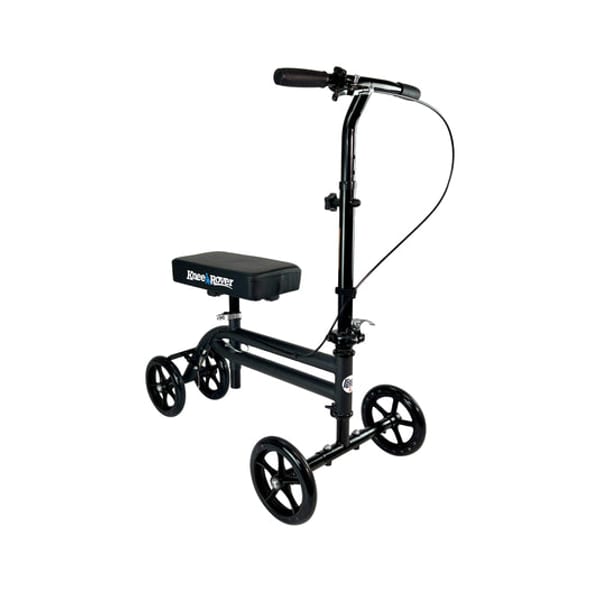 KneeRover Steerable Knee Scooter Best overall KneeRover KneeRover Steerable Knee Scooter Best overall KneeRover | 8.2/10 | Recovery & rehab | 300 lb | Yes | Check price |
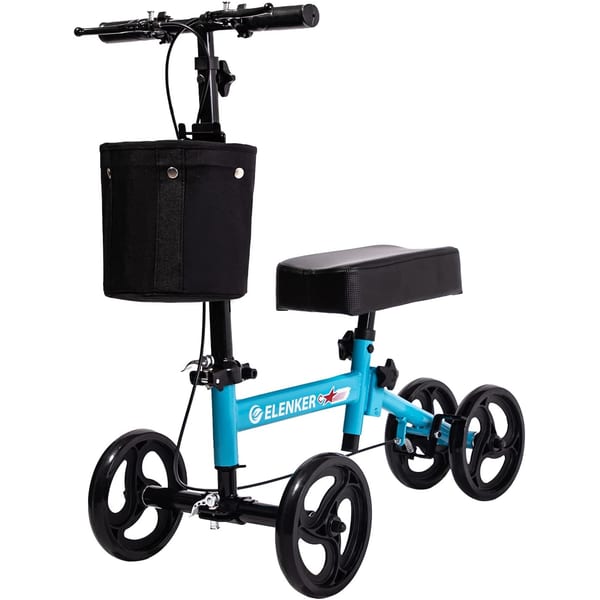 ELENKER Steerable Knee Walker Best value ELENKER ELENKER Steerable Knee Walker Best value ELENKER | 8/10 | Best on a budget | 300 lb | Yes | Check price |
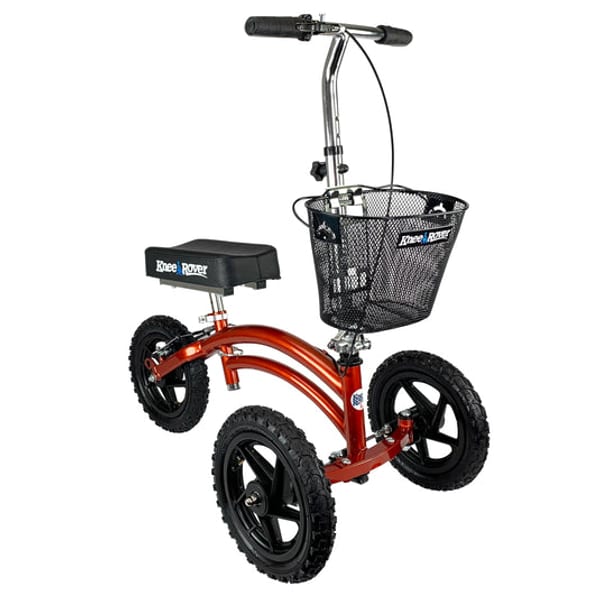 KneeRover All-Terrain Knee Scooter Best for outdoors KneeRover KneeRover All-Terrain Knee Scooter Best for outdoors KneeRover | 7.6/10 | Daily / long-term use | 350 lb | Yes | Check price |
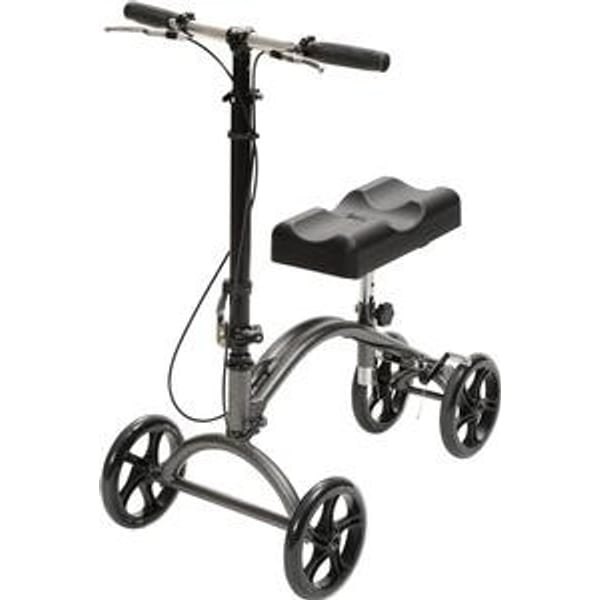 Drive Medical DV8 Knee Walker Drive Medical Drive Medical DV8 Knee Walker Drive Medical | 7.6/10 | Buying for a parent | 300 lb | Yes | Check price |
Prices and availability change; the buy link opens the current listing.
The picks, scored
The best all-around knee scooter for a foot or ankle injury. Steerable, stable, and easy to fold for the car, it is the hands-free alternative most people prefer over crutches.
- Steerable front end makes corners and doorways easy
- Dual locking rear brakes for parking and transfers
- Adjustable knee platform and handlebars fit most heights
- Standard wheels prefer smooth surfaces
- Not for hip or thigh injuries
The value knee scooter. It covers the essentials, steerable, adjustable, dual brakes, for noticeably less, which makes sense for a recovery you hope is short.
- Steerable and well-equipped for a budget price
- Comes with a basket and dual braking
- Adjustable knee pad and handlebars
- Knee pad is thinner than premium models
- Standard wheels are indoor/pavement only
The pick if your days include grass, gravel, or rough sidewalks. The big pneumatic tires transform outdoor use, at the cost of more weight when you load it in the car.
- Big 12" air tires roll over grass, gravel, and bumps
- Most stable, planted ride of the knee scooters here
- Still steerable with locking brakes
- Heavier and bulkier to lift and store
- Air tires can need occasional inflation
Drive Medical DV8 Knee Walker
Drive Medical · Buying for a parent
A polished, dependable knee walker from a name caregivers trust. Comfortable and easy to adjust, it is a safe pick when you want quality without going all-terrain.
- Well-built frame from a trusted medical brand
- Comfortable contoured knee pad and easy height adjustments
- Removable basket and smooth steering
- Costs a bit more than budget walkers
- Indoor/pavement wheels
Free guide
Not sure which knee scooter fits you?
Take our 60-second quiz or grab the free buyer’s guide. We’ll point you to the right pick for your situation.
How to choose a knee scooter
Steerable vs. fixed front wheels
Steerable knee scooters (most quality models) turn with the handlebars, which makes corners and doorways much easier. Fixed-wheel scooters cost less but are harder to maneuver in tight spaces.
Wheel size and where you go
Standard 7.5–8 inch wheels are fine indoors and on smooth pavement. All-terrain models with 12 inch pneumatic tires handle grass, gravel, and bumps, worth it if you spend time outdoors.
Knee pad and adjustments
A thick, contoured knee pad and an adjustable knee-platform height (and handlebar height) are what make a knee scooter comfortable over weeks. Check the height range fits you, and look for a locking parking brake.
Fit and weight capacity
Confirm the weight capacity and that the platform adjusts to your height. Most fold or collapse for the car; a steering-column release makes loading easier. Knee scooters suit lower-leg injuries, not hip or thigh injuries.